
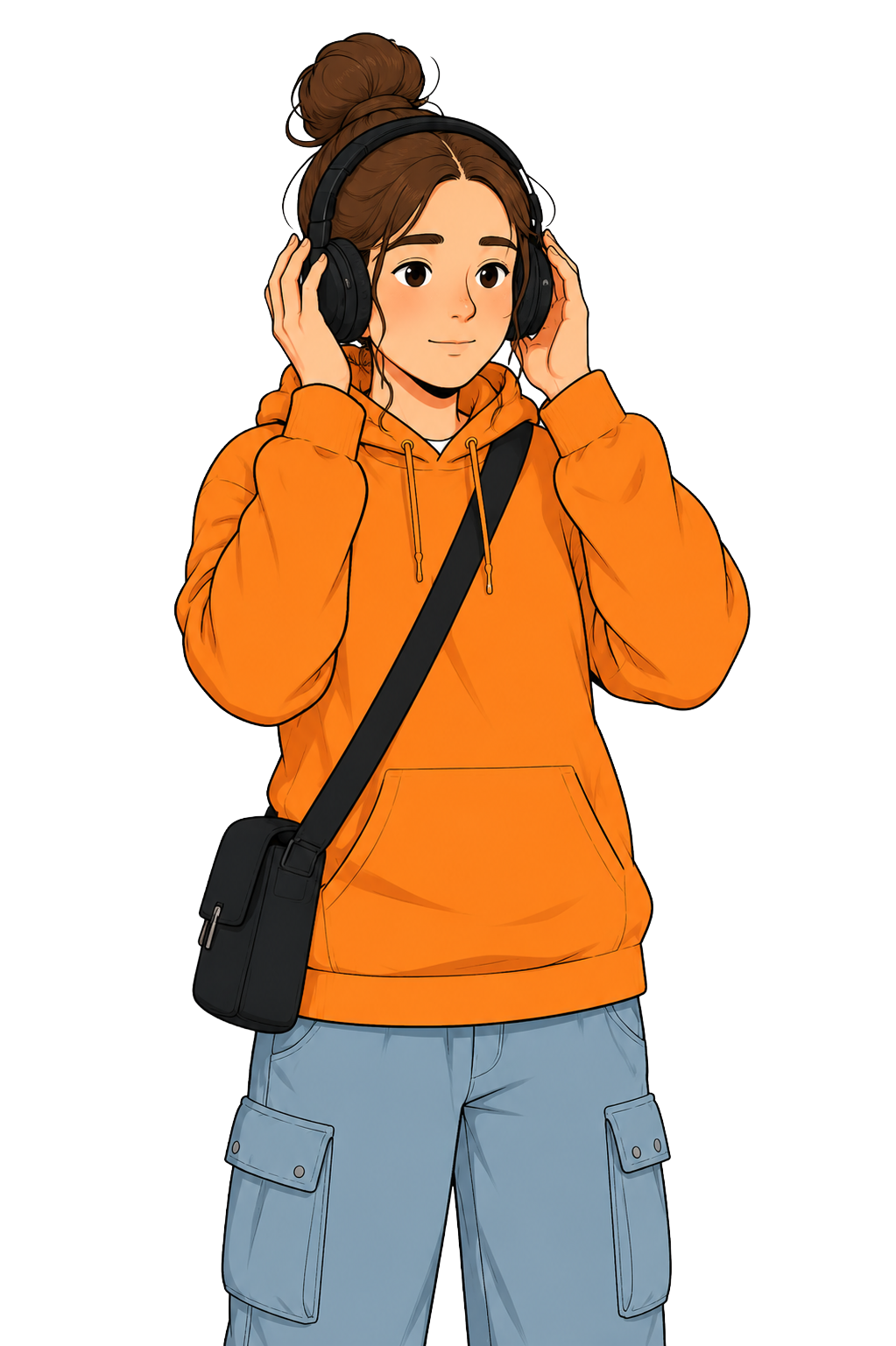
Emma
18 YEARS OLD
Loves football, movies and collecting DVDs.
-
"Noise can feel painful and overwhelming to me. Please be considerate in public spaces. Understanding and small adjustments can help me feel safe and included."
-
Emma is 18 years old and enjoys football, watching movies and collecting DVDs. She is friendly, creative and enjoys expressing herself through art and her hobbies.
Emma experiences sensory overload in noisy environments, particularly when there are multiple sounds happening at the same time. Busy public spaces can quickly become overwhelming and difficult for her to navigate.
-
Emma often finds public spaces such as buses, restaurants and crowded venues challenging because of the amount of noise around her.
On one occasion, people nearby were shouting loudly and there were multiple conversations happening at once. As the noise levels increased, Emma began to feel overwhelmed.
Some people did not understand why the noise was affecting her so much and assumed she was being rude or difficult when she struggled to engage. This left Emma feeling excluded and misunderstood.
-
When Emma experiences sensory overload, she can feel:
Angry
Overwhelmed
Scared
Lonely
Confused
Ignored
Sometimes Emma may:
Cover her ears
Need to move to a quiet space
Stop talking
Feel emotionally drained
-
Many people cannot see the impact that noise has on Emma and may not understand how overwhelming busy environments can be.
Others sometimes assume she is overreacting, being unfriendly or choosing not to participate, when in reality she is trying to cope with sensory overload.
A lack of understanding can make Emma feel isolated and unsupported in situations that others may find easy to manage.
-
Simple adjustments can make a big difference for Emma.
Helpful supports include:
Headphones or ear defenders
Access to quiet spaces
Warnings before loud noises
Understanding from others
Reduced background music
Calm and patient communication
These supports help Emma feel safer, more comfortable and more able to participate in everyday activities.